Why you'll love it
- Guided by a trained urban planner: the why behind every building, not just the what
- The whole story, from the 2000 Fjord City decision to the projects finishing in 2030
- Three high points: Deichman's top floor, the Opera roof and the view over the MUNCH tower
- The arguments, too: the Barcode's height, the MUNCH tower's hunch, the car-free centre
- Up to date for 2026: the new Government Quarter, the architecture museum reopening, Oslo S rebuild
- Coffee at Deichman, a sketchbook and a printed Fjord City map to keep
The route, minute by minute
Deichman → Akrobaten & Barcode → Dronning Eufemias gate → Opera roof → MUNCH → Bispevika → harbour promenade → Nasjonalmuseet · about 3.6 km, flat
When: Sat–Sun 09:30 & 14:00 · Mon–Fri evenings 18:00. Times below are for the first start of the day; later starts follow the same route. Evening walks follow the same route. In the dark months the Opera, the MUNCH tower and the National Museum's glowing Light Hall are at their most striking.
-
Deichman Bjørvika, the central library
Meeting point, indoorsCoffee, then up through the building: the 20-metre cantilever over the square, the light shafts that tie six floors together, and why it was named the world's best public library in 2021.
Included: Coffee and a sketchbook
-
Akrobaten bridge and the Barcode
250 m · 4 minFrom a 206-metre footbridge over the railway you see two Oslos: old Grønland on one side, the Barcode's twelve slim towers on the other. The 2003 masterplan, and the fight about height in a low city.
-
Dronning Eufemias gate
250 m · 4 minStand on the motorway that isn't there. The E18 runs through a 1,100-metre immersed tunnel opened in 2010, 675 metres of it under the sea. Then the car-free city centre, and what it did to traffic: about 28% fewer cars between 2016 and 2019.
-
The Opera House roof
300 m · 5 minSnøhetta's 2008 building is a public square tilted into the fjord. From the top we read the whole panorama: Ekeberg, the islands, MUNCH, the Barcode. A ten-minute sketch stop.
-
MUNCH
350 m · 5 minEstudio Herreros' 60-metre tower in recycled perforated aluminium, with its bent top. Critics called it menacing; others love how it bows to the fjord. Failed building or misunderstood one? You decide.
-
Bispevika and Kongsbrygga
300 m · 5 minThe last phase of Bjørvika, finishing around 2030, where the fjord flows in between the buildings. Across the water, the Sørenga seawater pool: proof that the harbour is swimmable again.
-
The harbour promenade to City Hall
2.1 km · 28 minAlong the nine-kilometre Havnepromenaden, opened in 2015, past Akershus Fortress to City Hall square: how Oslo stitched a continuous waterfront out of docks and car parks.
-
Nasjonalmuseet
400 m · 6 minKleihues + Schuwerk's 2022 museum and its 133-metre glass 'Light Hall'. We end with a look towards the new Government Quarter, opened in April 2026, where Picasso's concrete mural 'The Fishermen' has been rehung.
Your guide · Urban planner and founder of Maison Oslo · English · Français
Every walk is prepared with the makers, curators and sources behind each stop. Ask anything, in English or French.
Good to know
Do I need to know about architecture?
Not at all. The walk is about how a city decides what it wants to be, told through buildings. Architects and planners will enjoy it too: we can go as technical as you like.
Is it all outdoors?
About a third is inside or covered: Deichman, the MUNCH lobby and the Nasjonalmuseet arcade. In heavy rain we move stops indoors.
Can we do part of it by boat?
Yes, on private walks: an electric boat can replace the promenade and show you the waterfront from the fjord. Ask for a quote.
In French?
Yes. Every walk runs in English or French: choose when you book.
Read before you go
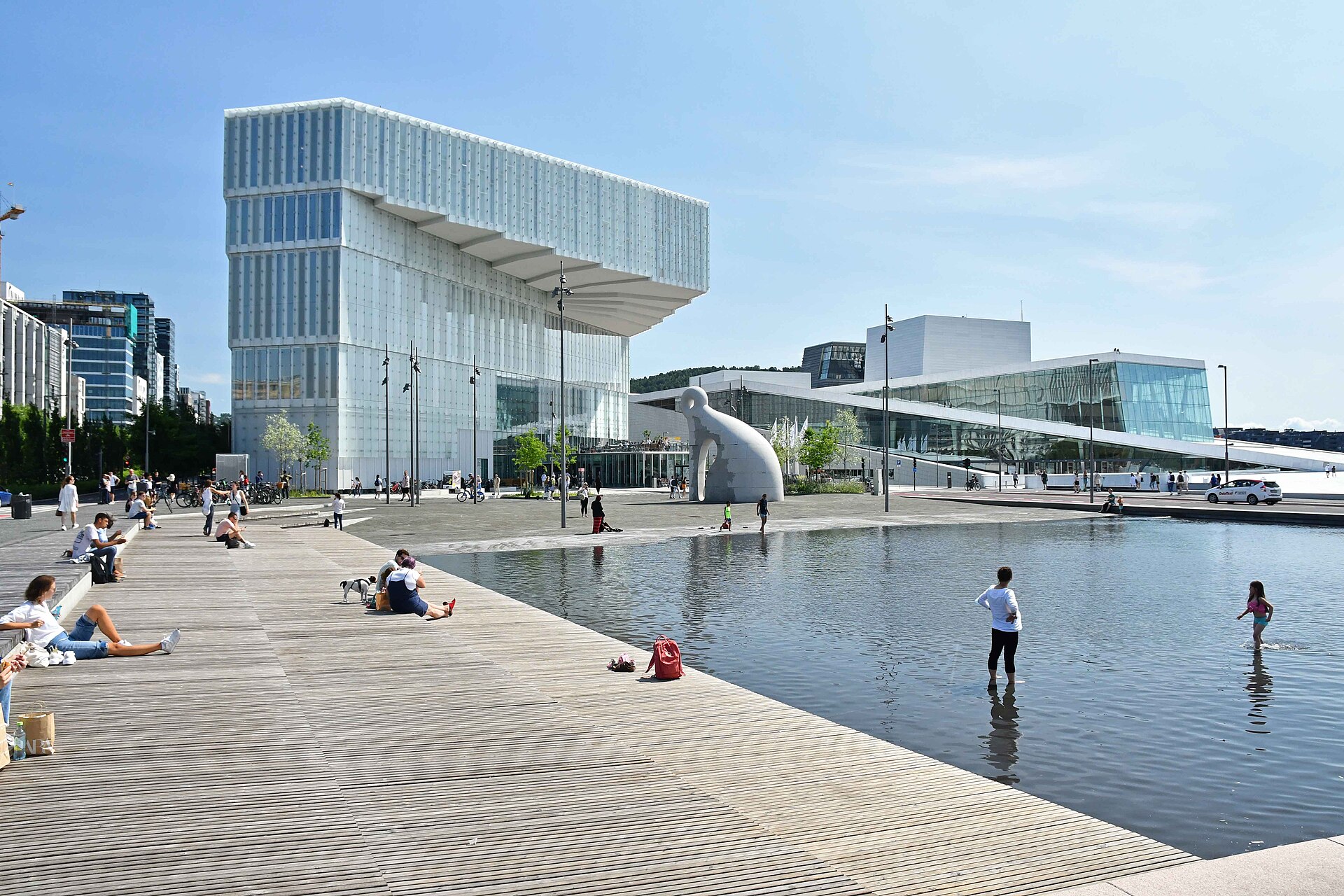
From motorway to fjord: how Oslo rebuilt its waterfront in 25 years
In 2000 Oslo decided to give its harbour back to people. The Opera, Deichman, MUNCH and the Barcode followed. An architect's guide to the Fjord City, and what is still being built.
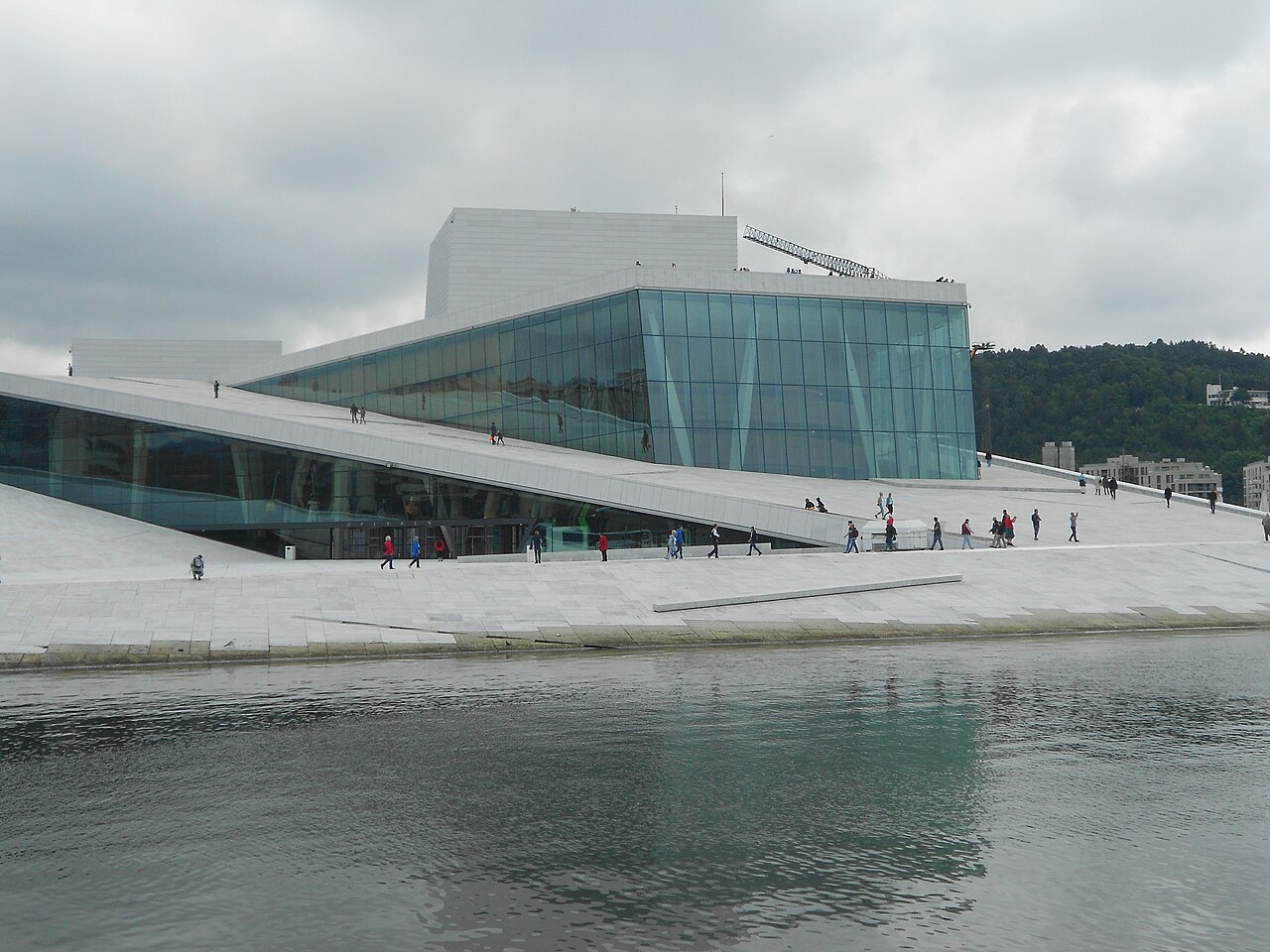
Can you walk on the Oslo Opera House roof? Yes, and here's how to do it well
The Oslo Opera House roof is free and open all day and night. An architect's guide to when to go, what you're looking at from the top, and what most visitors miss.