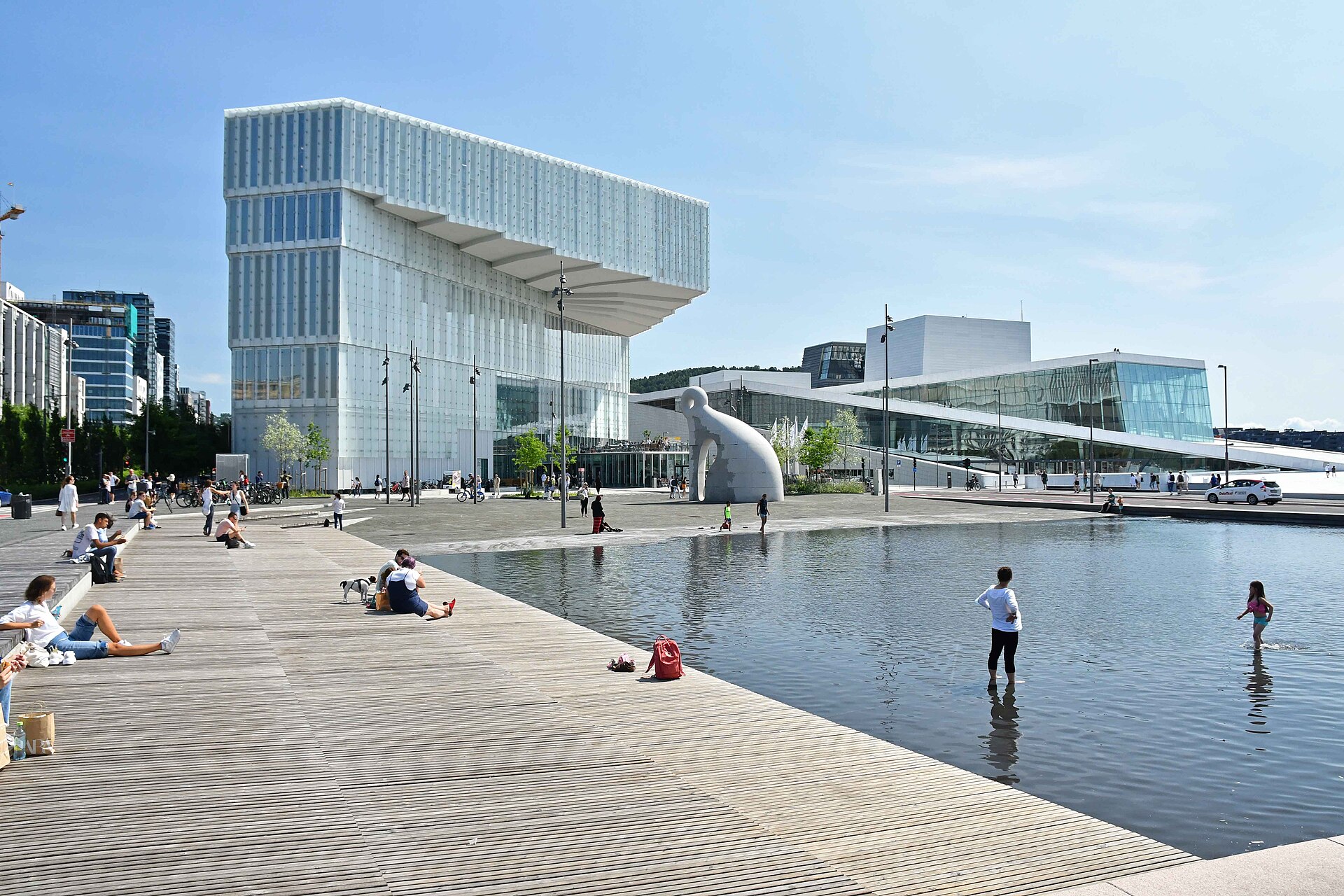
Ask an Oslo taxi driver of a certain age about Bjørvika and you will hear about the traffic. Until 2010 the E18 motorway ran along the water here, between the city and its fjord, beside a container port. Today the same stretch is where Oslo goes to swim, read and watch the sunset. How that happened is one of the great urban stories of our time, and it is still being written.
The short answer: in 2000 Oslo adopted the Fjordbyen (Fjord City) strategy to reclaim its harbour. The motorway went into a tunnel under the sea in 2010, and a chain of public buildings followed: the Opera (2008), Deichman library (2020), MUNCH (2021) and the National Museum (2022). The last phase finishes around 2030.
It started with a shipyard
The first piece was Aker Brygge. When the Akers Mekaniske Verksted shipyard closed in 1982, the site became shops, offices and restaurants, and the first phase opened in 1986. It proved something radical for a working port city: people would come to the water if you let them.
The big decision: 2000
On 19 January 2000 the city council adopted the Fjord City strategy: about 225 hectares of port, rail and road land to be transformed, eventually with up to 9,000 homes and 45,000 jobs. The zoning plan for Bjørvika followed in 2003.
The motorway that disappeared
You cannot build a waterfront behind a motorway. The answer was the Bjørvika tunnel, Norway's first immersed tunnel: 1,100 metres long, 675 of them under the sea, opened in September 2010. Stand on Dronning Eufemias gate today and the E18 is beneath your feet.
{: .tip } Insider tip: walk the Akrobaten footbridge over the railway tracks. On one side is Grønland, the old working-class east; on the other the Barcode. You see two Oslos in a single view.
The buildings, in the order they arrived
- The Opera House, Snøhetta (2008): the roof you can walk on, and the building that made everything else possible. Here's how to visit it well.
- The Barcode (2007–2016): twelve slim towers with gaps between them, designed by several firms to a plan by Dark, a-lab and MVRDV. Oslo's first skyline, and a heated debate about height in a low city.
- Tjuvholmen and Astrup Fearnley, Renzo Piano (2012): a glass sail roof, a small beach and a sculpture park at the western end.
- Deichman Bjørvika (2020): the central library by Lund Hagem and Atelier Oslo, with a cantilever of about 20 metres over the square. Named the world's best public library in 2021.
- MUNCH, Estudio Herreros (2021): the 60-metre leaning tower in recycled aluminium. The Guardian's critic called it "comically menacing"; decide for yourself from the Opera roof.
- Nasjonalmuseet, Kleihues + Schuwerk (2022): the largest cultural building in the Nordics, topped by a 133-metre glass "Light Hall".
Streets without cars
The waterfront came with a new idea of the city centre. From 2016 Oslo removed about 650 street parking places and rebuilt streets for people. Car traffic in the centre fell by about 28% between 2016 and 2019, and Oslo was European Green Capital in 2019. In 2026 Monocle ranked it among the ten most liveable cities in the world.
What is still being built
- Bispevika and Kongsbrygga: the final phase of Bjørvika, where the fjord runs between the buildings, due around 2030.
- The new Government Quarter: rebuilt after the 2011 attack and officially opened on 13 April 2026, with Picasso's concrete mural The Fishermen rehung on the new A block.
- Nye Oslo S: the central station's rebuild, with works from 2028.
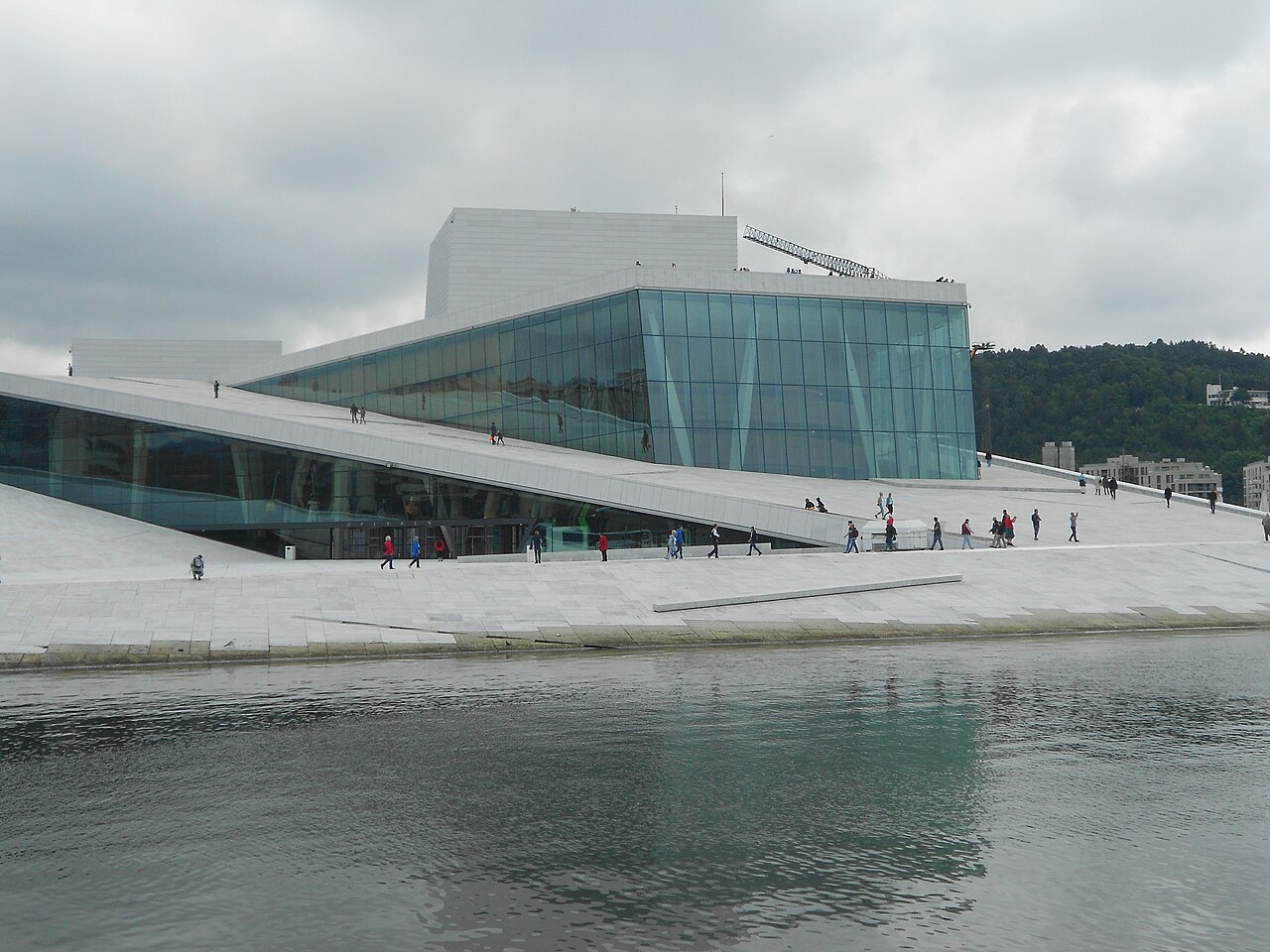
Oslo reclaims the fjord: from motorway to masterpiece
How Oslo sank a motorway under the sea and built an opera, a library and a leaning tower on top. 3 hours, max 8 guests, from NOK 1 650.
See the routeHow to see it
The whole story fits into a morning on foot. Start at Deichman, cross Akrobaten, climb the Opera roof, circle MUNCH, and follow the harbour promenade west past Akershus Fortress to the National Museum. It is about 3.5 km and completely flat, and it's the route of our Fjord City walk.
Quick answers
What is the Fjord City (Fjordbyen)?
Oslo's plan, adopted in 2000, to turn about 225 hectares of port, rail and road land along the harbour into public waterfront, homes and culture.
What are the must-see buildings?
The Opera House (2008), Deichman library (2020), MUNCH (2021), the National Museum (2022), the Barcode and Astrup Fearnley Museum at Tjuvholmen (2012).
Can you walk the whole waterfront?
Yes. The Havnepromenaden harbour promenade runs about 9 km and is marked by orange information towers.