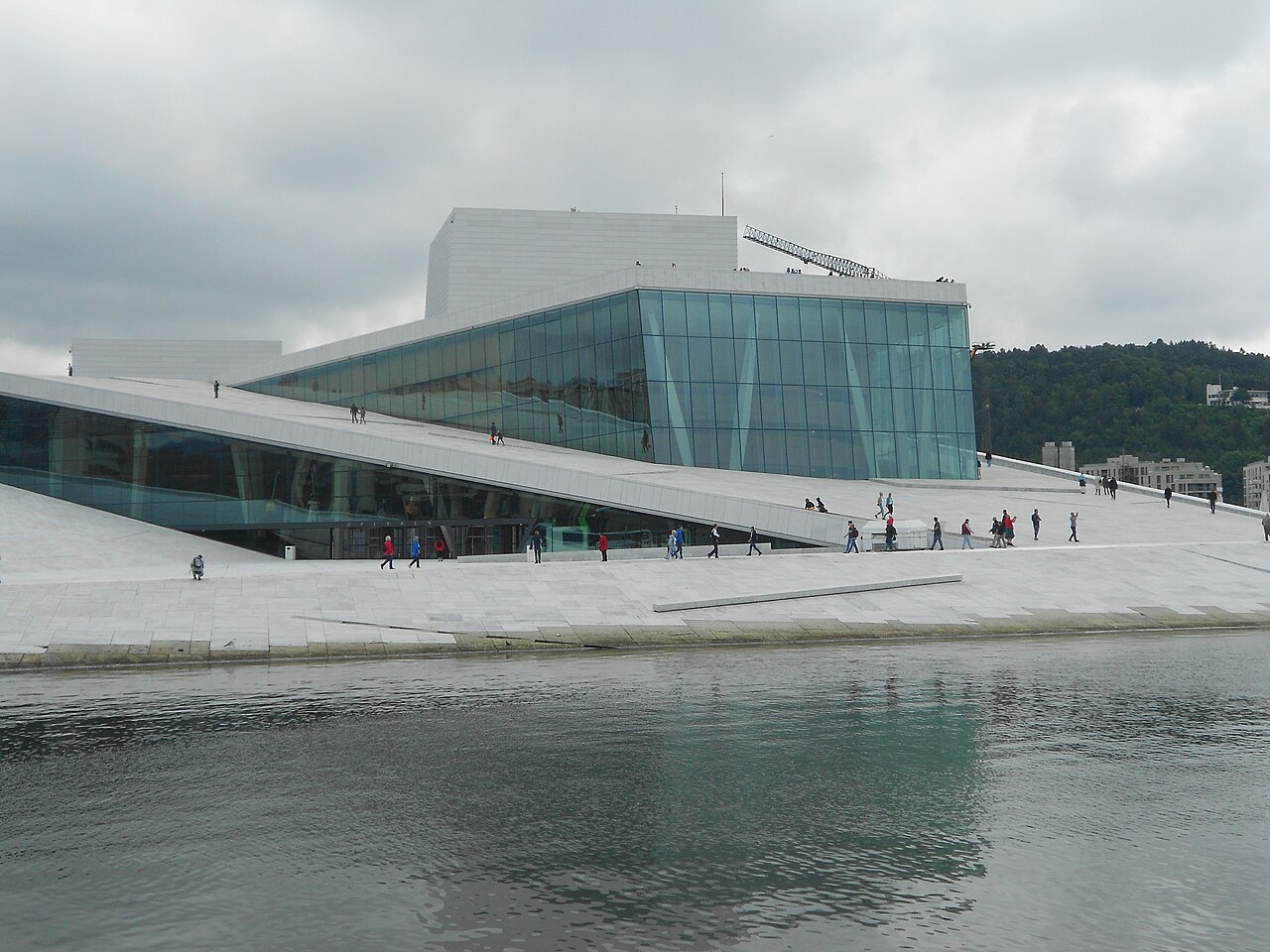
The first thing people do on the Opera roof is look down at their feet. The white stone runs straight into the water, there is no railing at the bottom, and for a second you are not sure you are allowed to be there. You are. That was the whole idea.
The short answer: yes, you can walk on the roof of the Oslo Opera House. It is free, public and open 24 hours a day, and it rises to about 22 metres above the fjord. Go early in the morning or at sunset, walk up from the side facing the water, and give yourself twenty minutes at the top.
A building you are meant to climb
When Snøhetta won the competition for the National Opera and Ballet, their big move was to treat the roof as a public square, tilted up out of the fjord. The building opened in 2008 as the first finished piece of Bjørvika, then an area of container stacks and motorway. In 2025 Dezeen named it the most significant building of its year in a series on 21st-century architecture.
What makes it work is that nobody has to buy anything to use it. Children slide, office workers eat lunch, couples watch the sunset, and nobody asks what you are doing there. In a city that is serious about public space, the roof is the manifesto.
When to go
- Early morning (before 9): empty roof, low light across the stone, and the best photographs.
- Sunset: the busiest time, and for good reason. In summer the sun sets late and slowly over the western fjord.
- Winter evenings: the glass foyer glows like a lantern. Beautiful, but the stone can be slippery.
{: .tip } Insider tip: walk up the long slope on the fjord side, not the steeper one by the entrance. You rise slowly with the water on your left, and the city appears all at once at the top.
What you are looking at from the top
Turn slowly clockwise and you can read the whole story of the new Oslo:
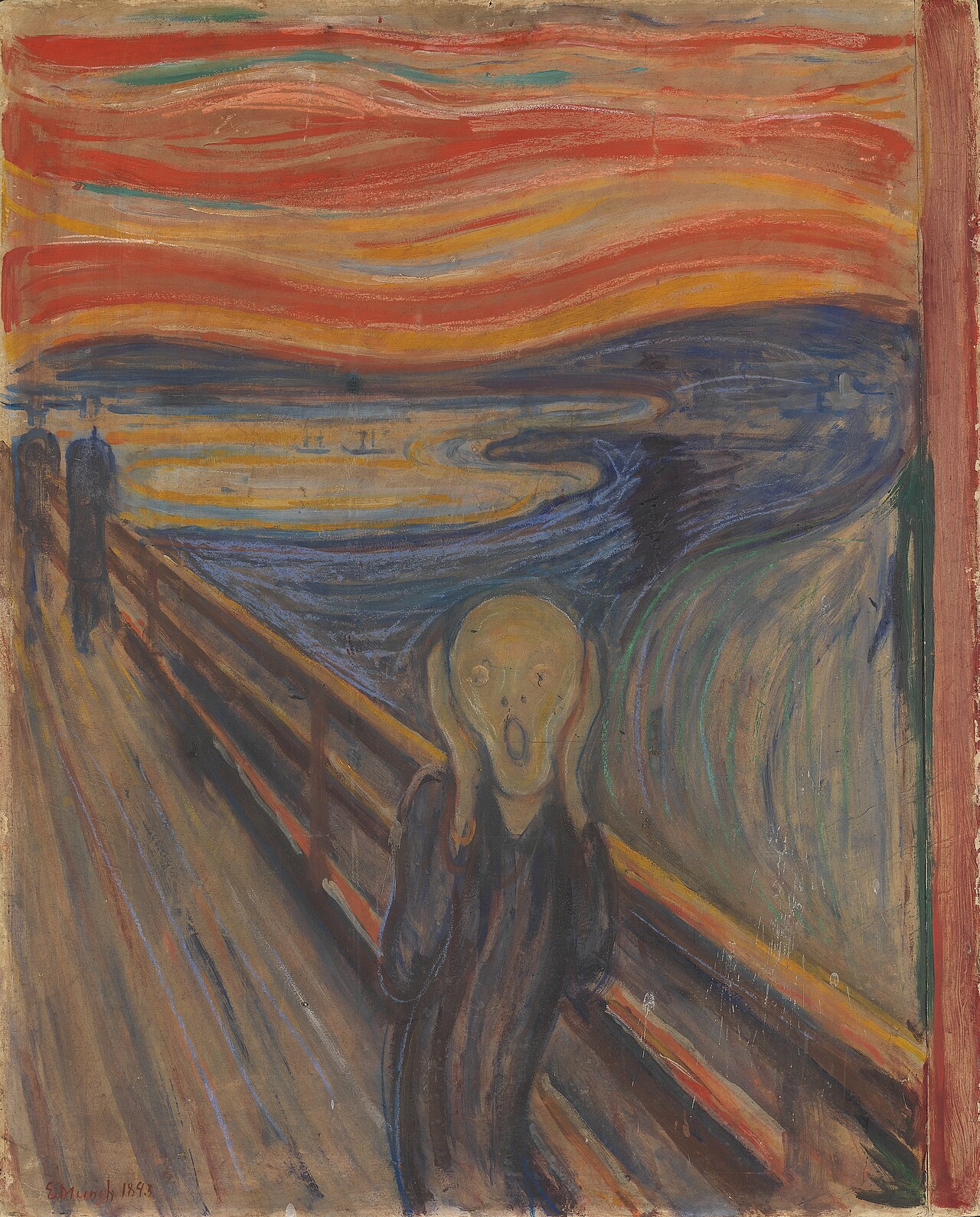
- Ekeberg hill, to the south-east: the green ridge where Munch had the vision that became The Scream.
- The fjord islands, Hovedøya and its monastery ruins among them, reachable by public ferry in summer.
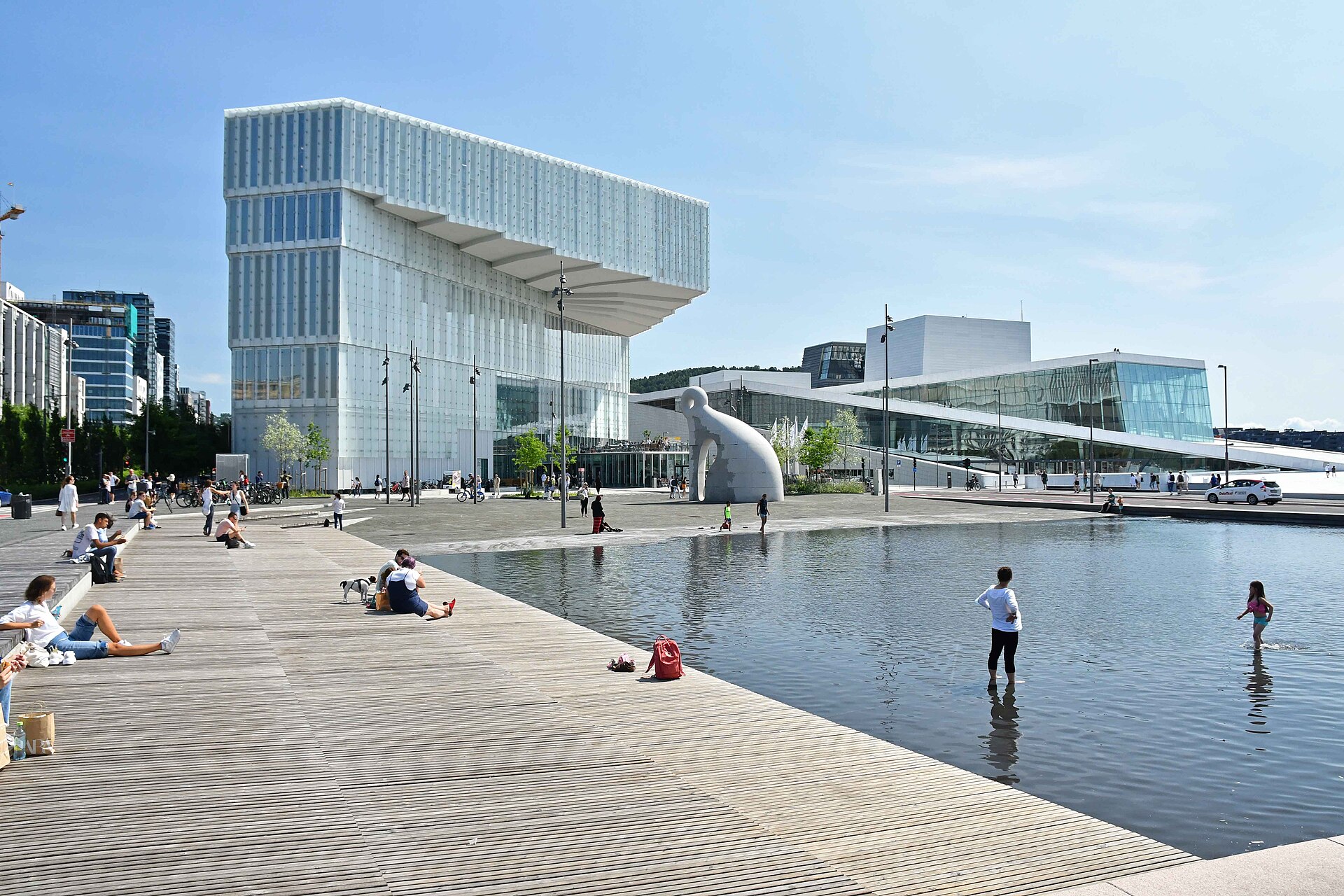
- MUNCH, the 60-metre tower with the bent top. People either love it or call it the museum that is bowing to the Opera.
- The Barcode, twelve slim towers of different heights with gaps between them, Oslo's first real skyline, and a fierce argument when it was planned.
- Deichman, the central library across the square, with its top floor cantilevered over the entrance.
Below you, under the water, runs the E18 motorway, sunk into a tunnel in 2010 so this square could exist. We tell that story in how Oslo rebuilt its waterfront.
Don't miss
- The foyer. The oak "wave wall" wrapping the auditorium is as good as the roof. It is generally open to the public.
- The backstage tour. About 50 minutes through the workshops and stage. Check times and prices on the Opera's own site.
- The sauna next door. On Sukkerbiten and along Langkaia, floating saunas let you swim in the fjord the roof looks over.
Oslo reclaims the fjord: from motorway to masterpiece
How Oslo sank a motorway under the sea and built an opera, a library and a leaning tower on top. 3 hours, max 8 guests, from NOK 1 650.
See the routeGetting there
The Opera is a five-minute walk from Oslo Central Station. Deichman, MUNCH and the Barcode are all within five minutes, which is why we start our architecture walk at the library with a coffee and end up on this roof less than an hour later.
Quick answers
Is the Oslo Opera House roof free?
Yes. The roof is public space, free and open around the clock.
How long do you need?
Twenty minutes to walk up and look around; an hour if you add the foyer and the waterfront.
Can you go inside without a ticket?
The foyer is generally open to the public. For the stage and workshops, book the official guided tour (about 50 minutes; check the current price on operaen.no).
Is it safe in winter?
The stone can be slippery when wet or icy, so wear shoes with grip and stay away from the edges.